PTO Laws
PTO Payout Laws by State: The Complete 2026 Guide
Discover which states legally require employers to pay out unused PTO when you quit or get fired. Check our 2026 state-by-state guide.
Updated 7 min read PTO Payout Research Team First published
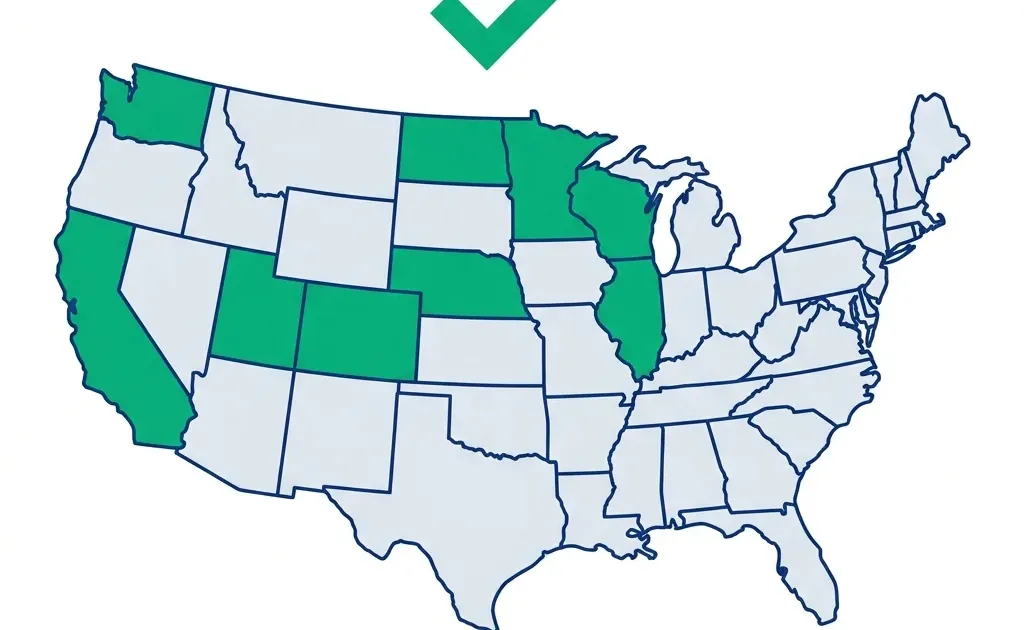
When you leave a job, you might be sitting on dozens (or even hundreds) of hours of unused paid time off. Whether you are entitled to receive a check for that unused time is one of the most critical employment law questions you can ask.
Because the federal Fair Labor Standards Act (FLSA) does not mandate paid vacation, there is no national requirement to pay out unused PTO [1]. Instead, the right to a PTO payout is entirely determined by state labor laws and your employer’s written policies.
In this complete 2026 guide, we break down exactly which states require PTO payout, which states leave it up to your employer, and where “use-it-or-lose-it” policies are illegal.
Which States Require PTO Payout?
In a minority of U.S. states, accrued paid time off is legally considered a form of earned compensation. In these jurisdictions, your employer is generally obligated to pay you for earned, unused vacation when you leave, whatever the reason (resignation, layoff, or termination).
As of September 2026, these 10 states generally require payout of earned vacation or PTO at separation:
- California
- Colorado
- Illinois
- Louisiana (if the employer offers vacation)
- Maine (vacation accrued since January 1, 2023; employers with more than 10 employees)
- Massachusetts
- Montana
- Nebraska
- North Dakota (with narrow exceptions for some voluntary quits)
- Rhode Island (after one full year with the employer)
In these states, a company policy that tries to take away vacation you already earned is generally not enforceable, though some states have the limits noted above. Check your state’s page for the exact rule.
States Where PTO Payout Depends on Your Employer’s Policy
A smaller group of states defaults to payout unless the employer has a clear written policy saying PTO is forfeited, and told you about it in advance. In other words, the default rule is that you get paid, but employers can “opt out” in writing.
These “conditional” states include:
- Maryland (written policy must be given to you at hiring)
- New York (conditions that cancel the benefit must be in writing)
- North Carolina (forfeiture clause must be written and communicated in advance)
If you work in one of these states, review your employee handbook or employment contract before resigning. If a properly communicated written policy says unused PTO is not paid out, it generally controls. If there is no written forfeiture policy, you may be owed the money.
In many other states, including Indiana, New Hampshire, West Virginia, Wisconsin, and Wyoming, the employer’s policy or agreement controls, but a policy that promises payout must be honored.
States With No PTO Payout Requirement
The majority of U.S. states have no laws requiring employers to pay out unused PTO [2]. In these states, the decision is left entirely to the employer.
Major states with no requirement include:
- Texas
- Florida
- Georgia
- Arizona
- Pennsylvania
- Ohio
In these jurisdictions, if your employer has a policy to pay out PTO, they must honor it (as a matter of contract law). However, if their policy states that PTO is forfeited, or if they choose to change their policy at any time, you have no legal recourse under state labor law.
What is “Use-It-or-Lose-It” and Where Is It Illegal?
A “use-it-or-lose-it” policy means that any accrued PTO you have not used by the end of the year (or your anniversary date) is wiped from your balance.
However, because some states classify earned PTO as wages, they treat confiscating earned time as taking wages. As of 2026, California, Colorado, Montana, and Nebraska do not allow employers to take away vacation you have already earned. North Dakota allows use-it-or-lose-it policies only with advance notice and a reasonable chance to use the time.
Instead of forcing you to lose your time, employers in states that ban forfeiture can usually set an “accrual cap” (e.g., you cannot bank more than 200 hours). Once you hit the cap, you stop earning new hours until you take a vacation, but you never forfeit the hours you have already earned.
What To Do If Your Employer Won’t Pay Your PTO
If you believe you are legally entitled to a PTO payout and your employer refuses to pay, take the following steps:
- Check your state law: Use the table below to verify your state’s exact rule.
- Review your handbook: Print a copy of your company’s PTO policy before your last day.
- File a wage claim: If your state requires a payout, you can file a formal wage claim with your state’s Department of Labor. This process is usually free and does not require a lawyer.
Need to know your exact payout amount?
Use our free tool to estimate how much your unused hours are worth, including taxes.
→ Go to the PTO Payout Calculator
2026 State-by-State PTO Payout Table
The following table summarizes the PTO payout requirements for all 50 states and Washington D.C. as of September 2026.
(Note: “Conditional” means the employer must pay unless a written forfeiture policy exists. “No law” means employer policy dictates, and a policy that promises payout must be honored.)
| State | Code | Requirement | Law / Stance |
|---|---|---|---|
| Alabama | AL | No law | Employer policy |
| Alaska | AK | No law | Employer policy |
| Arizona | AZ | No law | Employer policy |
| Arkansas | AR | No law | Employer policy |
| California | CA | Required | Labor Code § 227.3 |
| Colorado | CO | Required | C.R.S. § 8-4-101(14)(a)(III) |
| Connecticut | CT | No law | Employer policy |
| Delaware | DE | No law | Employer policy |
| District of Columbia | DC | No law | Employer policy |
| Florida | FL | No law | Employer policy |
| Georgia | GA | No law | Employer policy |
| Hawaii | HI | No law | Employer policy |
| Idaho | ID | No law | Employer policy |
| Illinois | IL | Required | 820 ILCS 115/5 |
| Indiana | IN | No law | Employer policy |
| Iowa | IA | No law | Employer policy |
| Kansas | KS | No law | Employer policy |
| Kentucky | KY | No law | Employer policy |
| Louisiana | LA | Required | La. R.S. 23:631 |
| Maine | ME | Required | 26 M.R.S. § 626 |
| Maryland | MD | Conditional* | Unless written policy excludes |
| Massachusetts | MA | Required | M.G.L. c. 149, § 148 |
| Michigan | MI | No law | Employer policy |
| Minnesota | MN | No law | Employer policy |
| Mississippi | MS | No law | Employer policy |
| Missouri | MO | No law | Employer policy |
| Montana | MT | Required | Mont. Code Ann. § 39-3-205 |
| Nebraska | NE | Required | Neb. Rev. Stat. § 48-1229 |
| Nevada | NV | No law | Employer policy |
| New Hampshire | NH | No law | Employer policy |
| New Jersey | NJ | No law | Employer policy |
| New Mexico | NM | No law | Employer policy |
| New York | NY | Conditional* | Unless written policy excludes |
| North Carolina | NC | Conditional* | Unless written policy excludes |
| North Dakota | ND | Required | N.D.C.C. § 34-14-09.2 |
| Ohio | OH | No law | Employer policy |
| Oklahoma | OK | No law | Employer policy |
| Oregon | OR | No law | Employer policy |
| Pennsylvania | PA | No law | Employer policy |
| Rhode Island | RI | Required | R.I. Gen. Laws § 28-14-4 (after 1 year) |
| South Carolina | SC | No law | Employer policy |
| South Dakota | SD | No law | Employer policy |
| Tennessee | TN | No law | Employer policy |
| Texas | TX | No law | Employer policy |
| Utah | UT | No law | Employer policy |
| Vermont | VT | No law | Employer policy |
| Virginia | VA | No law | Employer policy |
| Washington | WA | No law | Employer policy |
| West Virginia | WV | No law | Employer policy |
| Wisconsin | WI | No law | Employer policy |
| Wyoming | WY | No law | Employer policy |
Sources
What this guide relies on. Laws change, so confirm details with the agency that publishes them.
- Paylocity — PTO Payout Laws by State (opens in a new tab)
paylocity.com Secondary source Accessed June 3, 2026
- OnPay — PTO Payout Laws by State Primer (opens in a new tab)
onpay.com Secondary source Accessed June 3, 2026
This guide is general information, not legal advice. See how we source data or report an error.
Related guides
- PTO Laws · 4 min read What Happens to Your PTO When You Get Laid Off?Find out if your employer must pay your unused PTO after a layoff, how the WARN Act protects you, and exactly what steps to take in your first 48 hours.
- PTO Laws · 4 min read Unlimited PTO: Do You Get Paid Out When You Quit? (2026)Most employees with unlimited PTO are surprised to learn they may receive nothing when they leave. Here's the truth about unlimited PTO payout laws in 2026.
- PTO Laws · 5 min read What Is PTO? A Complete Guide for US Employees (2026)PTO stands for Paid Time Off — the hours your employer pays you while you're not working. Learn how PTO accrues and what happens when you leave.